Kaedrin.com
You are here: Kaedrin > Weblog > Archives > Music

Music
Friday, October 26, 2007

Bride of Friday is List Day
It's been months since I've posted one of these, and even Roy isn't doing this anymore, but I figure, why not?

Random Ten
  • The Secret Machines - "Road Leads Where It's Led"
  • Yoko Kanno - "Too Good Too Bad"
  • Guster - "Red Oyster Cult"
  • Mike Oldfield - "Tubular Bells Part One"
  • UNKLE - "Bloodstain"
  • Weezer - "Hash Pipe"
  • The New Pornographers - "The Bleeding Heart Show"
  • Modest Mouse - "People as Places"
  • Steroid Maximus - "Aclectasis"
  • Jimi Hendrix - "Machine Gun"
5 Underappreciated or Unknown Horror Movies
  • Mute Witness: Perhaps not strictly a horror film, but it's a very tense thriller, which is close enough in my book.
  • Bay of Blood: A great openeing sequence, lots of inventive death sequences (most of which were lifted by American films, notably the Friday the 13th series), and an ending so absurd that I'm still not sure it actually happened.
  • Parents: I haven't seen this in years and it probably doesn't really count as horror, but I think I'm one of about 6 people who've ever seen this. It plays it's story straight, but it's almost kinda funny.
  • Bubba Ho-tep: I don't know if this counts as overrated, but Bruce Campbell as an aging Elvis (who had faked his death) fighting a mummy in a Texas old-folks home (alongside a black JFK). What more can you ask for?
  • Manos: The Hands of Fate: Heh, just kidding.
Posted by Mark on October 26, 2007 at 11:11 PM .: Comments (0) | link | TrackBacks (0) :.


End of This Day's Posts

Sunday, June 10, 2007

Referential
A few weeks ago, I wrote about how context matters when consuming art. As sometimes happens when writing an entry, that one got away from me and I never got around to the point I originally started with (that entry was originally entitled "Referential" but I changed it when I realized that I wasn't going to write anything about references), which was how much of our entertainment these days references its predecessors. This takes many forms, some overt (homages, parody), some a little more subtle.

I originally started thinking about this while watching an episode of Family Guy. The show is infamous for its random cutaway gags - little vignettes that have no connection to the story, but which often make some obscure reference to pop culture. For some reason, I started thinking about what it would be like to watch an episode of Family Guy with someone from, let's say, the 17th century. Let's further speculate that this person isn't a blithering idiot, but perhaps a member of the Royal Society or something (i.e. a bright fellow).

This would naturally be something of a challenge. There are some technical explanations that would be necessary. For example, we'd have to explain electricty, cable networks, signal processing and how the television works (which at least involves discussions on light and color). The concept of an animated show, at least, would probably be easy to explain (but it would involve a discussion of how the human eye works, to a degree).

There's more to it, of course, but moving past all that, once we start watching the show, we're going to have to explain why we're laughing at pretty much all of the jokes. Again, most of the jokes are simply references and parodies of other pieces of pop culture. Watching an episode of Family Guy with Isaac Newton (to pick a prominent Royal Society member) would necessitate a pause just about every minute to explain what each reference was from and why Family Guy's take on it made me laugh. Then there's the fact that Family Guy rarely has any sort of redeemable lesson and often deliberately skews towards actively encouraging evil (something along the lines of "I think the important thing to remember is that it's ok to lie, so long as you don't get caught." I don't think that exact line is in an episode, but it could be.) This works fine for us, as we're so steeped in popular culture that we get the fact that Family Guy is just lampooning of the notion that we could learn important life lessions via a half-hour sitcom. But I'm sure Isaac Newton would be appalled.

For some reason, I find this fascinating, and try to imagine how I would explain various jokes. For instance, the episode I was watching featured a joke concerning "cool side of the pillow." They cut to a scene in bed where Peter flips over the pillow and sees Billy Dee Williams' face, which proceeds to give a speech about how cool this side of the pillow is, ending with "Works every time." This joke alone would require a whole digression into Star Wars and how most of the stars of that series struggled to overcome their typecasting and couldn't find a lot of good work, so people like Billy Dee Williams ended up doing commercials for a malt liquor named Colt 45, which had these really cheesy commercials where Billy Dee talked like that. And so on. It could probably take an hour before my guest would even come close to understanding the context of the joke (I'm not even touching the tip of the iceberg with this post).

And the irony of this whole thing is that jokes that are explained simply aren't funny. To be honest, I'm not even sure why I find these simple gags funny (that, of course, is the joy of humor - you don't usually have to understand it or think about it, you just laugh). Seriously, why is it funny when Family Guy blatantly references some classic movie or show? Again, I'm not sure, but that sort of humor has been steadily growing over the past 30 years or so.

Not all comedies are that blatant about their referential humor though (indeed, Family Guy itself doesn't solely rely upon such references). A recent example of a good referential film is Shaun of the Dead, which somewhow manages to be both a parody and an example of a good zombie movie. It pays homage to all the classic zombie films and it also makes fun of other genres (notably the romantic comedy), but in doing so, the filmmakers have also made a good zombie movie in itself. The filmmakers have recently released a new film called Hot Fuzz, which attempts the same trick for action movies and buddy comedies. It is, perhaps, not as successful as Shaun, but the sheer number of references in the film is astounding. There are the obvious and explicit ones like Point Break and Bad Boys II, but there are also tons of subtle homages that I'd wager most people wouldn't get. For instance, when Simon Pegg yells in the movie, he's doing a pitch perfect impersonation of Arnold Schwarzenegger in Predator. And when he chases after a criminal, he imitates the way Robert Patrick's T-1000 runs from Terminator 2.

References don't need to be part of a comedy either (though comedies seem to make the easiest examples). Hop on IMDB and go to just about any recent movie, and click on the "Movie Connections" link in the left navigation. For instance, did you know that the aformentioned T2 references The Wizard of Oz and The Killing, amongst dozens of other references? Most of the time, these references are really difficult to pick out, especially when you're viewing a foreign film or show that's pulling from a different cultural background. References don't have to be story or character based - they can be the way a scene is composed or the way the lighting is set (i.e. the Venetian blinds in Noir films).

Now, this doesn't just apply to art either. A lot of common knowledge in today's world is referential. Most formal writing includes references and bibliographies, for instance, and a non-fiction book will often assume basic familiarity with a subject. When I was in school, I was always annoyed at the amount of rote memorization they made us do. Why memorize it if I could just look it up? Shouldn't you be focusing on my critical thinking skills instead of making me memorize arbitrary lists of facts? Sometimes this complaining was probably warranted, but most of it wasn't. So much of what we do in today's world requires a well-rounded familiarity with a large number of subjects (including history, science, culture, amongst many other things). There simply isn't any substitute for actual knowledge. Though it was a pain at the time, I'm glad emphasis was put on memorization during my education. A while back, David Foster noted that schools are actually moving away from this, and makes several important distinctions. He takes an example of a song:
Jakob Dylan has a song that includes the following lines:

Cupid, don't draw back your bow
Sam Cooke didn't know what I know


Think of how much you need to know in order to understand these two simple lines:

1)You need to know that, in mythology, Cupid symbolizes love
2)And that Cupid's chosen instrument is the bow and arrow
3)Also that there was a singer/songwriter named Sam Cooke
4)And that he had a song called which included the lines "Cupid, draw back your bow."

... "Progressive" educators, loudly and in large numbers, insist that students should be taught "thinking skills" as opposed to memorization. But consider: If it's not possible to understand a couple of lines from a popular song without knowing by heart the references to which it alludes--without memorizing them--what chance is there for understanding medieval history, or modern physics, without having a ready grasp of the topics which these disciplines reference?

And also consider: in the Dylan case, it's not just what you need to know to appreciate the song. It's what Dylan needed to know to create it in the first place. Had he not already had the reference points--Cupid, the bow and arrow, the Sam Cooke song--in his head, there's no way he would have been able to create his own lines. The idea that he could have just "looked them up," which educators often suggest is the way to deal with factual knowledge, would be ludicrous in this context. And it would also be ludicrous in the context of creating new ideas about history or physics.
As Foster notes, this doesn't mean that "thinking skills" are unimportant, just that knowledge is important too. You need to have a quality data set in order to use those "thinking skills" effectively.

Human beings tend to leverage knowledge to create new knowledge. This has a lot of implications, one of which is intellectual property law. Giving limited copyright to intellectual property is important, because the data in that property eventually becomes available for all to built upon. It's ironic that educators are considering less of a focus on memorization, as this requirement of referential knowledge has been increasing for some time. Students need a base of knowledge to both understand and compose new works. References help you avoid reinventing the wheel everytime you need to create something, which leads to my next point.

I think part of the reason references are becoming more and more common these days is that it makes entertainment a little less passive. Watching TV or a movie is, of course, a passive activity, but if you make lots of references and homages, the viewer is required to think through those references. If the viewer has the appropriate knowledge, such a TV show or movie becomes a little more cognitively engaging. It makes you think, it calls to mind previous work, and it forces you to contextualize what you're watching based on what you know about other works. References are part of the complexity of modern Television and film, and Steven Johnson spends a significant amout of time talking about this subject in his book Everything Bad is Good for You (from page 85 of my edition):
Nearly every extended sequence in Seinfeld or The Simpsons, however, will contain a joke that makes sense only if the viewer fills in the proper supplementary information -- information that is deliberately withheld from the viewer. If you haven't seen the "Mulva" episode, or if the name "Art Vandelay" means nothing to you, then the subsequent references -- many of them arriving years after their original appearance -- will pass on by unappreciated.

At first glance, this looks like the soap opera tradition of plotlines extending past the frame of individual episodes, but in practice the device has a different effect. Knowing that George uses the alias Art Vandelay in awkward social situations doesn't help you understand the plot of the current episode; you don't draw on past narratives to understand the events in the present one. In the 180 Seinfeld episodes that aired, seven contain references to Art Vandelay: in George's actually referring to himself with that alias or invoking the name as part of some elaborate lie. He tells a potential employer at a publishing house that he likes to read the fiction of Art Vandelay, author of Venetian Blinds; in another, he tells an unemployment insurance caseworker that he's applied for a latex salesman job at Vandelay Industries. For storytelling purposes, the only thing that you need to know here is that George is lying in a formal interview; any fictitious author or latex manufacturer would suffice. But the joke arrives through the echo of all those earlier Vandelay references; it's funny because it's making a subtle nod to past events held offscreen. It's what we'd call in a real-world context an "in-joke" -- a joke that's funny only to people who get the reference.
I know some people who hate Family Guy and Seinfeld, but I realized a while ago that they don't hate those shows because of the contents of the shows or because they were offended (though some people certainly are), but rather becaues they simply don't get the references. They didn't grow up watching TV in the 80s and 90s, so many of the references are simply lost on them. Family Guy would be particularly vexing if you didn't have the pop culture knowledge of the writers of that show. These reference heavy shows are also a lot easier to watch and rewatch, over and over again. Why? Because each episode is not self-contained, you often find yourself noticing something new every time you watch. This also sometimes works in reverse. I remember the first time I saw Bill Shatner's campy rendition of Rocket Man, I suddenly understoood a bit on Family Guy which I thought was just a bit based on being random (but was really a reference).

Again, I seem to be focusing on comedy, but it's not necessarily limited to that genre. Eric S. Raymond has written a lot about how science fiction jargon has evolved into a sophisticated code that implicitely references various ideas, conventions and tropes of the genre:
In looking at an SF-jargon term like, say, "groundcar", or "warp drive" there is a spectrum of increasingly sophisticated possible decodings. The most naive is to see a meaningless, uninterpretable wordlike noise and stop there.

The next level up is to recognize that uttering the word "groundcar" or "warp drive" actually signifies something that's important for the story, but to lack the experience to know what that is. The motivated beginning reader of SF is in this position; he must, accordingly, consciously puzzle out the meaning of the term from the context provided by the individual work in which it appears.

The third level is to recognize that "ground car" and "warp drive" are signifiers shared, with a consistent and known meaning, by many works of SF -- but to treat them as isolated stereotypical signs, devoid of meaning save inasmuch as they permit the writer to ratchet forward the plot without requiring imaginative effort from the reader.

Viewed this way, these signs emphasize those respects in which the work in which they appear is merely derivative from previous works in the genre. Many critics (whether through laziness or malice) stop here. As a result they write off all SF, for all its pretensions to imaginative vigor, as a tired jumble of shopworn cliches.

The fourth level, typical of a moderately experienced SF reader, is to recognize that these signifiers function by permitting the writer to quickly establish shared imaginative territory with the reader, so that both parties can concentrate on what is unique about their communication without having to generate or process huge expository lumps. Thus these "stereotypes" actually operate in an anti-stereotypical way -- they permit both writer and reader to focus on novelty.

At this level the reader begins to develop quite analytical habits of reading; to become accustomed to searching the writer's terminology for what is implied (by reference to previous works using the same signifiers) and what kinds of exceptions and novelties convey information about the world and the likely plot twists.

It is at this level, for example, that the reader learns to rely on "groundcar" as a tip-off that the normal transport mode in the writer's world is by personal flyer. At this level, also, the reader begins to analytically compare the author's description of his world with other SFnal worlds featuring personal flyers, and to recognize that different kinds of flyers have very different implications for the rest of the world.

For example, the moderately experienced reader will know that worlds in which the personal fliers use wings or helicopter-like rotors are probably slightly less advanced in other technological ways than worlds in which they use ducted fans -- and way behind any world in which the flyers use antigravity! Once he sees "groundcar" he will be watching for these clues.

The very experienced SF reader, at the fifth level, can see entire worlds in a grain of jargon. When he sees "groundcar" he associates to not only technical questions about flyer propulsion but socio-symbolic ones but about why the culture still uses groundcars at all (and he has a reportoire of possible answers ready to check against the author's reporting). He is automatically aware of a huge range of consequences in areas as apparently far afield as (to name two at random) the architectural style of private buildings, and the ecological consequences of accelerated exploitation of wilderness areas not readily accessible by ground transport.
While comedy makes for convenient examples, I think this better illustrates the cognitive demands of referential art. References require you to be grounded in various subjects, and they'll often require you to think through the implications of those subjects in a new context. References allow writers to pack incredible amounts of information into even the smallest space. This, of course, requires the consumer to decode that information (using available knowledge and critical thinking skills), making the experience less passive and more engaging. Use references will continue to flourish and accellerate in both art and scholarship, and new forms will emerge. One could even argue that aggregation in various weblogs are simply exercises in referential work. Just look at this post, in which I reference several books and movies, in many cases assuming familiarity. Indeed, the whole structure of the internet is based on the concept of links -- essentialy a way to reference other documents. Perhaps this is part of the cause of the rising complexity and information density of modern entertainment. We can cope with it now, because we have such systems to help us out.

Posted by Mark on June 10, 2007 at 03:08 PM .: Comments (8) | link | TrackBacks (1) :.


End of This Day's Posts

Friday, March 09, 2007

Friday is Apparently List Day
After several years of blogging, I've finally figured out that Friday is list day. So here are a few lists:

Random Ten:
  • Guster - "Two Points For Honesty"
  • Amon Tobin - "Keepin' It Steel (The Anvil Track)"
  • Radiohead - "Optimistic"
  • Four Tet - "As Serious As Your Life"
  • The Bad Plus - "Keep the Bugs Off Your Glass and the Bears Off Your Ass"
  • Lynyrd Skynyrd - "Free Bird" (Yee ha!)
  • Yoko Kanno & Seatbelts - "Clutch"
  • Franz Ferdinand - "Michael"
  • Pink Floyd - "Money"
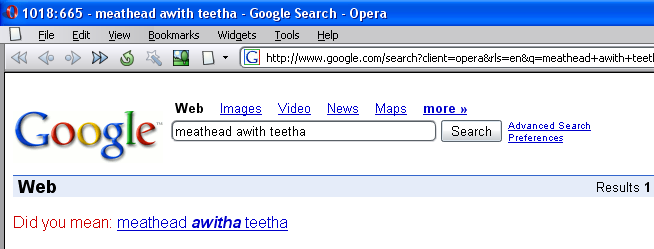
  • Nine Inch Nails - "Awitha Teetha" (Well, it's really just With Teeth, but I prefer Meathead's title because it more accurately reflects the way the song sounds. Incidentally, I didn't remember how Meathead spelled that, so I mistakenly googled for "awith teetha." Google, ever thoughtful, corrected my spelling. This is mildly amusing.)
The Two Greatest Reviews of NIN's With Teeth:
  • The Aformentioned Meathead Review: Overall score of [AWITHA_TEETHA]: 9,116 out of 9,652 stars
  • Tiny Mix Tapes Review: Concise but informative, and actually somewhat accurate. Sadly, Trentie Poo doesn't seem likely to reverse the trend with his new album, Year Zero (which comes out in just a few weeks, only two years after Awitha Teetha and 17 years ahead of my speculation), but we shall see, I guess. If you're interested, there's a thread in the Kaedrin Forum where we talk about the new songs that have been "leaked" (link to the songs in the thread) and the lame political overtones to the new album.
Three Documentaries I Watched Recently:
  • This Film Is Not Yet Rated: Or "Mocking the MPAA's rating process." And there's plenty to mock. It's a little gimmicky and sanctimonious, but it makes some good points and is pretty entertaining to watch (after all, most of the films that are covered are ones that get the dreaded NC-17, and that generally only happens because of sex scenes). Worth a watch if you're interested in the subject or you want to see a bunch of uncensored... uh... art...
  • Aliens of the Deep: Who wouldn't love to be James Cameron? The dude makes the biggest movie evar, then decides to take a break from filmmaking for a while and engage in expensive hobbies (and hang out with his brothers) like deep sea diving. He did this before in a movie called Ghosts of the Abyss, where he chronicles an expedition to the Titanic wreck (that film is only so-so, imho). This time around, he brings along a bunch of Nasa scientists who observe the preternaturally weird lifeforms that thrive deep in the ocean where no sunlight reaches and speculate on alien life forms. Take a look at this one:

    What the heck is this thing?

    Zoinks! That thing is amazing. The extended cut of the movie on the DVD is good and worth watching, but it can get a bit slow or meander a bit at times. Still, fascinating stuff.
  • Grizzly Man: Werner Herzog's portrait of grizzly bear activist Timothy Treadwell, who spent 13 years among the grizzlies before they inevitably killed him (and his girlfriend). This movie is creepy on many levels. Treadwell himself would be creepy enough even if we didn't know what eventually happened to him, but his death looms over the entire film. The worst part is that Treadwell is constantly proclaiming his love for the bears and nature in general, but you can clearly see (even early in the film, long before his death) how absolutely and completely the bears do not reciprocate in any way. Treadwell was clearly aware of the dangers (at least on an intellectual level), and often loudly trumpets them, but he thinks he is somehow exceptional. He thinks he's been accepted by the bear community because he loves them. It's almost like a greek tragedy or something. The grand majority of the footage was provided by Treadwell himself, who had compiled nearly 100 hours of footage on the last 5 of his trips to Alaskan bear country. Herzog sifted through all that footage and intercut it with the requisite interviews with family, friends, and experts. It's quite a good film, though a little disturbing and not all that pleasant. It was actually a little interesting to watch this after watching Aliens of the Deep, as the contrast between people who treat nature with a degree of awe and respect (i.e. people who don't invite death) and Treadwell, who clearly loves and cherishes nature, but tragically doesn't respect it...
I like this list day thing. Expect more in the future (not all of which will be book and music related, I promise).
Posted by Mark on March 09, 2007 at 12:02 AM .: Comments (2) | link | TrackBacks (0) :.


End of This Day's Posts

Saturday, August 26, 2006

Travelling Link Dump
I'll be on vacation this week, so Kaedrin compatriots Samael and DyRE will be posting in my stead, though they may not be able to post tomorrow. In any case, here are some links to chew on while I'm gone.
  • Bruce Schneier Facts: In the style of the infamous Chuck Norris Facts, some enterprising folks have come up with facts for security expert Bruce Schneier. "Bruce Schneier only smiles when he finds an unbreakable cryptosystem. Of course, Bruce Schneier never smiles." and "There is an otherwise featureless big black computer in Ft. Meade that has a single dial with three settings: Off, Standby, and Schneier." Heh, Cryptonerd humor.
  • Khaaan! [via the Ministry]
  • Neal Stephenson Q&A (.ram Real Video): I hate Real Player too, but it's worth it to see the man in action. It's from a few years ago, but it's great stuff.
  • I Smell a Mash-Up: James Grimmelmann notes the irony of Weird Al Yankovic's new song entitled Don’t Download This Song (available for free download, naturally) that parodies the RIAA's anti-downloading efforts.
  • How to read: Nick Hornby tells us to read what we like:
    It's set in stone, apparently: books must be hard work, otherwise they're a waste of time. And so we grind our way through serious, and sometimes seriously dull, novels, or enormous biographies of political figures, and every time we do so, books come to seem a little more like a duty, and Pop Idol starts to look a little more attractive. Please, please, put it down.

    And please, please stop patronising those who are reading a book - The Da Vinci Code, maybe - because they are enjoying it.

    For a start, none of us knows what kind of an effort this represents for the individual reader. It could be his or her first full-length adult novel; it might be the book that finally reveals the purpose and joy of reading to someone who has hitherto been mystified by the attraction that books exert on others. And anyway, reading for enjoyment is what we should all be doing.

    ...The regrettable thing about the culture war we still seem to be fighting is that it divides books into two camps, the trashy and the worthwhile. No one who is paid to talk about books for a living seems to be able to convey the message that this isn't how it works, that 'good' books can provide every bit as much pleasure as 'trashy' ones.
That's all from now. I hope everyone has a great week. I now leave you in the capable hands of the guest bloggers, Sam & DyRE....
Posted by Mark on August 26, 2006 at 11:09 AM .: Comments (0) | link | TrackBacks (0) :.


End of This Day's Posts

Sunday, June 18, 2006

Novelty
David Wong's article on the coming video game crash seems to have inspired Steven Den Beste, who agrees with Wong that there will be a gaming crash and also thinks that the same problems affect other forms of entertainment. The crux of the problem appears to be novelty. Part of the problem appears to be evolutionary as well. As humans, we are conditioned for certain things, and it seems that two of our insticts are conflicting.

The first instinct is the human tendency to rely on induction. Correlation does not imply causation, but most of the time, we act like it does. We develop a complex set of heuristics and guidelines that we have extrapolated from past experiences. We do so because circumstances require us to make all sorts of decisions without posessing the knowledge or understanding necessary to provide a correct answer. Induction allows us to to operate in situations which we do not uderstand. Psychologist B. F. Skinner famously explored and exploited this trait in his experiments. Den Beste notes this in his post:
What you do is to reward the animal (usually by giving it a small amount of food) for progressively behaving in ways which is closer to what you want. The reason Skinner studied it was because he (correctly) thought he was empirically studying the way that higher thought in animals worked. Basically, they're wired to believe that "correlation often implies causation". Which is true, by the way. So when an animal does something and gets a reward it likes (e.g. food) it will try it again, and maybe try it a little bit differently just to see if that might increase the chance or quantity of the reward.
So we're hard wired to create these heuristics. This has many implications, from Cargo Cults to Superstition and Security Beliefs.

The second instinct is the human drive to seek novelty, also noted by Den Beste:
The problem is that humans are wired to seek novelty. I think it's a result of our dietary needs. Lions can eat zebra meat exclusively their entire lives without trouble; zebras can eat grass exclusively their entire lives. They don't need novelty, but we do. Primates require a quite varied diet in order to stay healthy, and if we eat the same thing meal after meal we'll get sick. Individuals who became restless and bored with such a diet, and who sought out other things to eat, were more likely to survive. And when you found something new, you were probably deficient in something that it provided nutritionally, so it made sense to like it for a while -- until boredom set in, and you again sought out something new.
The drive for diversity affects more than just our diet. Genetic diversity has been shown to impart broader immunity to disease. Children from diverse parentage tend to develop a blend of each parent's defenses (this has other implications, particularly for the tendency for human beings to work together in groups). The biological benefits of diversity are not limited to humans either. Hybrid strains of many crops have been developed over the years because by selectively mixing the best crops to replant the next year, farmers were promoting the best qualities in the species. The simple act of crossing different strains resulted in higher yields and stronger plants.

The problem here is that evolution has made the biological need for diversity and novelty dependent on our inductive reasoning instincts. As such, what we find is that those we rely upon for new entertainment, like Hollywood or the video game industry, are constantly trying to find a simple formula for a big hit.
It's hard to come up with something completely new. It's scary to even make the attempt. If you get it wrong you can flush amazingly large amounts of money down the drain. It's a long-shot gamble. Every once in a while something new comes along, when someone takes that risk, and the audience gets interested...
Indeed, the majority of big films made today appear to be remakes, sequels or adaptations. One interesting thing I've noticed is that something new and exciting often fails at the box office. Such films usually gain a following on video or television though. Sometimes this is difficult to believe. For instance, The Shawshank Redemption is a very popular film. In fact, it occupies the #2 spot (just behind The Godfather) on IMDB's top rated films. And yet, the film only made $28 million dollars (ranked 52 in 1994) in theaters. To be sure, that's not a modest chunk of change, but given the universal love for this film, you'd expect that number to be much higher. I think part of the reason this movie failed at the box office was that marketers are just as susceptible to these novelty problems as everyone else. I mean, how do you market a period prison drama that has an awkward title an no big stars? It doesn't sound like a movie that would be popular, even though everyone seems to love it.

Which brings up another point. Not only is it difficult to create novelty, it can also be difficult to find novelty. This is the crux of the problem: we require novelty, but we're programmed to seek out new things via correllation. There is no place to go for perfect recommendations and novelty for the sake of novelty isn't necessarily enjoyable. I can seek out some bizarre musical style and listen to it, but the simple fact that it is novel does not guarantee that it will be enjoyable. I can't rely upon how a film is marketed because that is often misleading or, at least, not really representative of the movie (or whatever). Once we do find something we like, our instinct is often to exhaust that author or director or artist's catalog. Usually, by the end of that process, the artist's work begins to seem a little stale, for obvious reasons.

Seeking out something that is both novel and enjoyable is more difficult than it sounds. It can even be a little scary. Many times, things we think will be new actually turn out to be retreads. Other times, something may actually be novel, but unenjoyable. This leads to another phenomenon that Den Beste mentions: the "Unwatched pile." Den Beste is talking about Anime, and at this point, he's begun to accumulate a bunch of anime DVDs which he's bought but never watched. I've had similar things happen with books and movies. In fact, I have several books on my shelf, just waiting to be read, but for some of them, I'm not sure I'm willing to put in the time and effort to read them. Why? Because, for whatever reason, I've begun to experience some set of diminishing returns when it comes to certain types of books. These are similar to other books I've read, and thus I probably won't enjoy these as much (even if they are good books).

The problem is that we know something novel is out there, it's just a matter of finding it. At this point, I've gotten sick of most of the mass consumption entertainment, and have moved on to more niche forms of entertainment. This is really a signal versus noise, traversal of the long tail problem. An analysis problem. What's more, with globalization and the internet, the world is getting smaller... access to new forms of entertainment are popping up (for example, here in the US, anime was around 20 years ago, but it was nowhere near as common as it is today). This is essentially a subset of a larger information aggregation and analysis problem that we're facing. We're adrift in a sea of information, and must find better ways to navigate.
Posted by Mark on June 18, 2006 at 03:55 PM .: Comments (6) | link | TrackBacks (0) :.


End of This Day's Posts

Thursday, June 15, 2006

10,000 Days
It's been a while since I've gotten really into an album, but Tool's new 10,000 Days seems to have broken that trend. I've been listening to it almost nonstop for about a month now, and I'm still picking it apart. As I mentioned the other day, I have some odd musical tastes:
...I usually only listen to the music (as opposed to paying attention to the lyrics). When the music is interesting enough to me, I'll eventually get around to the lyrics. Sometimes, I'm pleased, other times I find out I'm listening to German anarchists. Oh well, you win some, you lose some.
As such, I think I generally approach music in a different way than most people. One other thing to note is that when it comes to music, I have next to no technical knowledge. Tune, chords, notes, I have a general idea of what these things are, but I'm no musician. I treat music much more subjectively than I treat movies or books; I just know what I like to hear, and that's about it. So here are my thoughts for each song on this album:
  1. Vicarious: An excellent song, perhaps my favorite on the album. It provides an interesting transition from Lateralus (Tool's last album) to this album. It seems to share some of the musical themes of Lateralus, though only in a subtle way. I generally find myself attracted to songs that have an interesting structure. Longer songs tend to fit this bill - there's more time to fill and most good songs don't just keep repeating the same thing over and over again for too long, so there needs to be some interesting transitions, etc... Vicarious does a pretty good job at this for being a medium length (7:08) song. Maynard's singing approaches a whisper at some points in this song, but while that initially struck me as odd, I find that working pretty well at this point. One thing I like is when music actually builds towards the ending, and this song certainly does so, especially in the last chorus.
  2. Jambi: This song continues the transition from Vicarious to the rest of the album. A little more repetitive than the other songs, especially with respect to the guitar work, but it has its moments. It's another medium length song, though its structure isn't as interesting as Vicarious'. Still, it's a decent enough song.
  3. Wings for Marie (pt 1): The best of the slower, moodier songs on the album. At this point in the album, the sound has shifted enough that it no longer feels like I'm listening to a continuation of Lateralus. One of the things Tool does a lot is insert these little interludes between songs. They're nice the first time you listen to the album, but after a while, they're just tracks that you skip. At a little over six minutes long, this song hardly qualifies as an interlude, and it's got enough substance to hold my attention, but I have a feeling it will be overshadowed by the next song (sort of how Parabol is overshadowed by Parabola on Lateralus).
  4. 10,000 Days (Wings pt 2): One of the longest songs on the album (11:15), I haven't yet gotten to the point where I fully appreciate this song's structure. However, I enjoy the way it starts and gradually gets more and more involved (the thunderstorm that underlies the song is well done and evocative). On any album that I love, I find that I'll start out loving and listening to a bunch of songs, usually skipping past various others on the album in favor of the ones I like most. But then I sorta rediscover the songs I used to skip over. I think this will be one of my rediscoveries in a few months...
  5. The Pot: Perhaps the most commercially viable song on this album, it's also pretty darn good. It's the shortest of the non-moody songs on the album (6:34), with a pretty interesting structure and a few good moments. As Kaedrin reader DyRE notes, this song has a certain playfulness about it which kinda breaks the mood of the preceding songs rather abruptly, but I still think it works just fine. Maynard's voice isn't as distorted or washed out here as it is in several of the other songs, and it really gives the song a different feel.
  6. Lipan Conjuring: One of the aforementioned intermission type songs, there's not much to say about this one.
  7. Lost Keys (Blame Hoffman): - Another slow, moody piece. It features a dialogue between a nurse and a doctor talking about a patient. I'm not sure if this is sampled from a movie or anything, but it appears that my refusal to acknowledge lyrics includes stuff l ike this. Perhaps a future rediscovery, but I think this one will eventually fall off the playlist in favor of the faster songs...
  8. Rosetta Stoned: Only a few seconds shorter than 10,000 Days, this is one of the longest songs on the album (11:13). I either haven't had enough time to digest the structure of this song, or its pacing is a bit off. A really good long song is difficult, so I guess some misfires are to be expected. Don't get me wrong, I've gotten to like this song more as I've listened to it more, so I think it just means I'm still working through the structure. There are a certainly a few shining minutes in this song that are really, truly awesome. One is about two thirds of the way in, when things slow down a bit and the percussion switches gears. The song sort of jams on that for a little while, then starts building to a crescendo where the music kicks in a little and Maynard starts singing his lines. It's an awesome moment, and it goes on for about a minute which is great (usually songs that reach such a point peter out really quickly). Yeah, so even if it seems a bit off in the beginning, that part around 8 minutes in really makes up for it (and then some).

    Also, there's a part in this song that really sounds a lot like Third Eye. And I think there's another part in the song that sounds a bit like the Grudge (I think it's on this song, but it also sort of sounds like this elsewhere on 10,000 days). I'll obviously have to listen more, but I can here various pieces of their previous work here. I don't want to give the impression that this song is basically a carbon copy of their previous work though. It's very distinct, but it's interesting to hear familiar notes from time to time.
  9. Intension: Another moody segue piece. Haven't listened to this much, so it might make an interesting rediscovery. Somewhat reminiscent of the song Disposition, from Lateralus.
  10. Right in Two: Another great song that starts a little slow and builds until they're really going at it. Great stuff here. Once again, I think I noticed some themes from previous Tool albums peeing out in this song, though again, this isn't a bad thing. One thing I need to mention, but haven't yet is that the drummer for Tool, Danny Carey, is absolutely incredible (in this song, but also in all of the others). He has a very intricate style, often incorporating other percussive techniques (like tabla) and seamlessly lapsing into a sort of controlled chaos that's almost uncanny. It's also nice to hear a drummer that doesn't appear to be influenced at all by hip-hop (i.e. no Amen Breaks to be found here).
  11. Viginti Tres: - Yet another moody piece that I probably won't listen to very much.
From a structural standpoint, it's a very dense album, and I can tell that I'm still going to be picking it apart a few months from now. It's also quite a strange album. Almost all of the songs are extremely long, with some having a very convoluted arrangement. This might make the album less accessible to some. DyRE tells me that the lyrics are more personal and that the album has a generally non-uplifting tone, which is something that will probably turn me off once I get around to looking at the lyrics (I'm in no hurry to do so at this point, especially knowing that). Overall, I'm quite happy with the album, though I don't know if I'd place it above their best album, Ænima. I think it says something that I wasn't disappointed even though it's been 5 years since their last album though.
Posted by Mark on June 15, 2006 at 08:10 PM .: Comments (2) | link | TrackBacks (0) :.


End of This Day's Posts

Tuesday, June 13, 2006

Playlist Meme
Julenka posts the first 50 songs in her current playlist. When it comes to music, I seem to be on a completely different wavelength than most people. Part of this has to do with the fact that I usually only listen to the music (as opposed to paying attention to the lyrics). When the music is interesting enough to me, I'll eventually get around to the lyrics. Sometimes, I'm pleased, other times I find out I'm listening to German anarchists. Oh well, you win some, you lose some. Anyway, that might be worth keeping in mind as you read this list of 30 songs which I got by putting my iPod on shuffle. Also, it seems that the practice of simply ripping a lot of CDs and putting them on the iPod have given me a quite a few songs that I would probably skip if they came up, so I'll make some notes for each song too...
  1. The Great Below - Nine Inch Nails: Good stuff, a little different from what most might associate with NIN.
  2. What Planet Is this - Yokko Kanno and the Seatbelts: Great Cowboy Bebop soundtrack jazzy stuff.
  3. Pristina (remix) - Faith No More: This is a rarity, I think. A low-key remix of a low-key song on a low-key album of a low-key band (well, I'm not sure they were low-key, but that just makes for a better description). I doubt anyone reading this has even heard it (if you have, you better leave a comment!)
  4. Powder - Yokko Kanno and the Seatbelts: Short and more soundtracky (and thus less interesting to listen to by itself), this is from one of my favorite moments in the Cowboy Bebop movie.
  5. Er, this is a chapter from an audio book (Malcolm Gladwell's The Tipping Point). A good book, but I'm pretty sure the audio version I have is abridged.
  6. Nice Dream - Radiohead: Decent stuff.
  7. Four Sticks - Led Zepplin: Eh, not my favorite, but not bad either.
  8. Welcome to the Machine - Pink Floyd: Same as above.
  9. In My Tree - Pearl Jam: From what may be my favorite Pearl Jam album, No Code.
  10. Don't Let Me Be Misunderstood - Santa Esmeralda: This is a really great (and long!) song from the Kill Bill Soundtrack.
  11. Love is a Fist - Mr. Bungle - Eh, I'd probably skip it (I have to be in a certain mood to listen to early Mr. Bungle)
  12. Closer - Nine Inch Nails: Infamous, but I like the music.
  13. Ultra - KMFDM: So-so. It's a toss-up as to whether or not I'd listen if this came up.
  14. Backyard - Guster: A good song, but it ends sort of abrubptly. Which is odd, because it fades out.
  15. Gotta knock a little harder - Yokko Kanno and the Seatbelts: Hmm, this list isn't so random, is it?
  16. Vanity Fair - Mr. Bungle: From California, my favorite Mr. Bungle album.
  17. Ommadawn Part Two - Mike Oldfield: Great, epic stuff (though I prefer to listen to the whole album at once, as opposed to jumping in at part two).
  18. Ziggy Stardust - David Bowie: Good stuff.
  19. Alberto Balsalm - Aphex Twin: More good stuff.
  20. Lion Thief - The Beta Band: This band always reminds me of that scene in High Fidelity where John Cusack proclaims that he'll now sell 5 copies of a Beta Band album.
  21. Heartbreaker - Led Zeppelin: Good stuff.
  22. March of the Pigs - Nine Inch Nails: One of the first NIN songs to catch my eye.
  23. Rose - A Perfect Circle: A so-so song. I'd probably skip it.
  24. Echoes - Pink Floyd: One of those 26 minute long Epics. Sometimes I love that sort of song.
  25. Pushit - Tool: Great song, one of my favorite Tool songs.
  26. Wings For Marie (Pt 1) - Tool: One of the better slow, moody songs off their new album, but still slow and probably something I'd skip...
  27. Trust - KMFDM: One of the things I love about KMFDM is when they have female vocalists provide the chorus (or sing more of the song). It puts them on a different level.
  28. Silence is the Question - The Bad Plus: Piano based jazz. Decent stuff, but this song is a little slow. I'd probably skip.
  29. Darts of Pleasure - Franz Ferdinand: That's the band, not the archduke.
  30. Alma-Ville - Vince Guaraldi: How can you not like Vince Guaraldi? I mean, come one, he did the soundtrack to the Charlie Brown Christmas!
That's all. Perhaps a little more about music later in the week. Feel free to post your own list in the comments...
Posted by Mark on June 13, 2006 at 09:20 PM .: Comments (3) | link | TrackBacks (0) :.


End of This Day's Posts

Sunday, June 11, 2006

Link Dump
Time is short this week, so just a few links I found interesting...
  • Make Me Watch TV: Collaborative torture. This guy lets people choose what he watches on TV. Naturally, voters tend to make him watch the worst of the worst (though it seems that sometimes people are nice and let him watch an episode of Lost or Doctor Who). After each viewing, he blogs about what he's seen. One interesting thing here is that, if you want, you can "sponsor" a time slot: If you pay him $5 (per half hour), he'll let you override the popular vote and force him to watch the program of your choice. Democracy in action.
  • Life After the Video Game Crash: In light of recent bloggery, this article in which David Wong recaps the history of video games (including the beloved Atari 2600) also predicts the coming of another Video Game Crash. Basically, it argues that the next generation gaming consoles offer very little in the way of true innovation and Wong is betting that people will stay away in droves. Regardless of what you may think, it's worth reading because Wong is funny:
    And yet, even with the enormous number of games (Metroid delayed my discovering girls for a for a good 18 months), the gaming experience itself still couldn't keep our interest for more than a few years. Attention waned again, but this time new, fancier systems arrived just in time, offering a new and novel experience thanks to prettier graphics and character animation. And yet those systems (the Sega Genesis and later the SNES), as great as they were, eventually were retired to closets and attics and the sandy carpets of the Pakistani black market. It was a bitter, dark cloud of Japanese expletives that wafted from the meeting rooms at Nintendo and Sega when they realized their industry effectively lived under a curse.
  • The World's Most Important 6 Second Drum Beat: Nate Harrison's fascinating 2004 video explores the history of the "Amen Break," a six second drum beat from a b-side of a 1969 single that's been used extensively in early hiphop and sample-based music. From there, it spawned subcultures like drum-and-bass and jungle music. Aside from the strange fact that this is a video (there doesn't appear to actually be a reason for this - most of the video is simply a video of a record playing or a guy sitting in a room, for instance), this is compelling stuff. It covers the history of the break, but also some issues about ownership, copyright, and what constitutes art and creativity...
Apologies for the lameness of this entry. I've been travelling this weekend, and I'm exhausted. I've got several of these weekends coming up, so I'm going to try and set up some guest bloggers to post in my stead. I think the next one will be in two weeks or so. Anyway, I'll try to post again later this week...
Posted by Mark on June 11, 2006 at 09:05 PM .: Comments (0) | link | TrackBacks (0) :.


End of This Day's Posts

Sunday, November 06, 2005

Lileks Podcast
Last Friday's Bleat featured James Lileks' first (that I know of) podcast. Since I've now got an iPod, I figured I might as well download it and see what all the fuss is about. It's strange to hear the voice of someone you've previously only read. In this case, Lileks' voice is much deeper than the voice I have in my head when I read his stuff.

It's a short podcast, but the main topic is "a demonstration of the thesis that every era gets the Batman music it deserves." Pretty good, and it's about what you'd expect from Lileks. I only have one minor quibble - how can you talk about Batman music matching the time period and not actually go into detail on Prince's horrific (yet appropriate for the 80s) Batdance? (Prince's role in the 1989 soundtrack is mentioned, but no clips are played.) Oh, and 1 other minor complaint is that the podcast isn't listed in iTunes, so I can't set it to automatically update. Get with the program James! Anyway, this weeks was quite good, and I look forward to future installments...

Speaking of podcasts, does anyone have any recommendations? The only other podcast that I've gotten into is the CHUD Show (which is interesting, but probably only to movie nerds who can appreciate really bad jokes like myself).
Posted by Mark on November 06, 2005 at 07:26 PM .: Comments (2) | link | TrackBacks (0) :.


End of This Day's Posts

Sunday, October 30, 2005

Save it with the music
In general, the process of making a movie is a difficult one, but some genres are more difficult than others. Horror (and science fiction), in particular, require certain leaps of faith that are more difficult to accomplish than other, more conventional, genres. This places more importance on all aspects of the film. For a good horror movie, everything needs to be there, including the writing (important for any movie, but horror films usually require a little more imagination), cinematography (very important in horror), and the music, amongst other aspects.

I'm going to focus on the music because while music is important in all films, it is even moreso in horror. Films depend on music to help set the mood, and good composers are often able to do so without calling too much attention to themselves. Perhaps it's just me, but music is often able to evoke an understated emotional response, one that sometimes isn't recognizable until after the film has ended. As such, the auditory aspects of a film are often overlooked in favor of the other, more overt, features of the film. Yet any good horror film will rely almost as much on the sound as the visuals to provide the scares.
"Music in horror films is probably more powerful than in any other genre, so it's good for a composer to do them because he can be very influential on the action."
That quote is from composer Simon Boswell (found via this excellent article on sound and horror films), notable for his work on many horror films (including several by the infamous Italian director Dario Argento), and I think he's right. Some great examples of how composers really shape the action can be heard in Jaws (courtesy of John Williams) and John Carpenter's Halloween. John Williams' ominous searching cue steadily builds on itself, brilliantly setting the tone for the viewer. Perhaps even more evokative is John Carpenter's score for his seminal slasher flick, Halloween. He describes the process of writing the music for Halloween:
I shot Halloween in the spring of 1978. It was my third feature and my first out-and-out horror film. I had three weeks of pre-production planning, twenty days of principle photography, and then Tommy Lee Wallace spent the rest of the spring and summer cutting the picture, assisted by Charles Bornstein and myself. I screened the final cut minus sound effects and music, for a young executive from 20th Century-Fox (I was interviewing for another possible directing job). She wasn’t scared at all. I then became determined to "save it with the music."
And she was right. Just try watching halloween with the sound off and you'll see what I mean. Most of the tension fades away, and while there are certainly some creepy visuals, it's the music that truly cements the scares in the film. The simplistic three-note piano melody that Carpenter composed for the main theme (mp3) is truly haunting. It stays with you, and plays in your head whenever the lights go out.
The scoring sessions took two weeks because that’s all the budget would allow. Halloween was dubbed in late July and I finally saw the picture with an audience in the fall. My plan to "save it with the music" seemed to work. About six months later I ran into the same young executive who had been with 20th Century-Fox (she was now with MGM). Now she too loved the movie and all I had done was add music. But she really was quite justified in her initial reaction.
There are some techniques which are more obvious than others, but if they're done well, there's nothing wrong with that. The aformentioned Jaws theme is an excellent example of a long musical build-up that also builds tension in the audience, who becomes convinced that something is going to happen. In Jaws, it does, but many composers have subverted that convention by using the musical build-up as misdirection (i.e. instead of a giant monster, it turns out that the ominous sounds were just caused by the family cat).

Another obvious technique is what Roger Ebert describes as the "boo" moment (or what Carpenter calls the "stingers"), where a sudden sharp noise startles the audience, which is also often used to emphasise a visual surprise. This is sometimes referred to as a "cheap" technique, but I think it's fine if it's used sparingly.

However, even in films that have striking themes and stingers, the music ultimately serves as a medium for subliminal suggestion, setting the mood and subtlety evoking an emotional response. In a horror film, this is of paramount importance, and that's why most great horror films have notable soundtracks. John Carpenter had resolved to "save it with the music," but I don't think there was anything unique about that experience. I think most horror films need to have that musical base to truly be effective.

Update: This post has been featured in the Carnival of Music! Check it out for lots more music goodness.
Posted by Mark on October 30, 2005 at 02:53 PM .: Comments (3) | link | TrackBacks (0) :.


End of This Day's Posts

Thursday, November 01, 2001

The Belated Blues
Hellhound by Mitch Myers (real audio): An interesting NPR piece I heard on the way home yesterday. It is based on the story of legendary blues artist Robert Johnson, who, legend has it, sold his soul to the devil to obtain his amazing guitar skills. As if to strengthen this Faustian explaination, Johnson explored in his music the battle of good against evil and recorded songs like "Hell Hound on My Trail" and "Me and the Devil Blues." There is some contention as to where Robert is buried, too. Two graves in different cemetaries in Greenwood, Mississippi both bear his name, and there is a popular roadside spot nearby where some believe he was interred. Myers' story is an interesting one, concerning ghastly secret track on Robert Johnson's boxed set. In his short life, Johnson recorded only 41 tracks, many of which are alternate takes of the same song, but his sound has had an large impact on blues and rock music ever since.
Posted by Mark on November 01, 2001 at 09:16 AM .: link :.


End of This Day's Posts

Thursday, September 06, 2001

Third Eye Open
There has been a press release regarding a string quartet tribute to Tool which sounds rather interesting. "This concept, inspired by the complex compositions and unique sound of Tool, delivers dramatic interpretations of the best of the band. This album takes the band's rhythmic guitars, assault-rifle drums, wide-ranging, multiple-octave vocals and turns them into aggressive string playing, deep and percussive cello, and vigorous yet delicate vocalizations on violin." I have long been a fan of the Finnish Apocalyptica, who played some of Metallica's greatest hits with their cellos (then later went on to arrange their own cello-driven heavy metal with their latest album, Cult), so I'm sure I'll enjoy this tribute to Tool...
Posted by Mark on September 06, 2001 at 01:01 PM .: link :.


End of This Day's Posts

Tuesday, August 14, 2001

NIN Naming Conventions
While rifling through one of my old backup cds, I found the following image which describes the rather humorous way in which Trent Reznor (of Nine Inch Nails fame) names his numerous hard drives, filenames, and programs:

NIN naming conventions
Posted by Mark on August 14, 2001 at 11:56 PM .: link :.


End of This Day's Posts

Tuesday, May 15, 2001

Lateralus
Today marks the release of Tool's long awaited new album, Lateralus. DyRE was lucky enough to catch KROQ playing the album in its entirety, two days before its release. He recorded his thoughts during the playing. Apparently, it rocks ("fuck yeah!"). DyRE also posted a weblog entry with an awfully cool interview with Maynard and Danny Carey (I was especially pleased to see Mike Patton as a "related artist" at the bottom of said interview). All of this craziness has inspired me to embark on a perilous quest for the new album during mine lunch break. I can only hope that my co-workers understand when I start trashing my cube because the album rocks so much...
Posted by Mark on May 15, 2001 at 08:36 AM .: link :.


End of This Day's Posts

Monday, March 19, 2001

Where the Hell is the DVD?
Chapter One in the touching story of the rumored Nine Inch Nails DVD, by Meathead. For those of you who are unfamiliar with Meathead's work, I highly recommend you check it out, even if you aren't a big fan of NIN (for instance, chapter one contains a menacing Sting as well as the horrors of the evil Verizon empire). Rarely have I ever seen someone who is able to consistantly rant about a single topic with such quality for so damn long. Bravo, Meathead. Bravo.

Now that I'll actually have some computing power, I'm beginning to look forward to things like this.
Posted by Mark on March 19, 2001 at 08:31 AM .: link :.


End of This Day's Posts

Thursday, January 18, 2001

I Care Because You Do
Richard D. James, the genius/lunatic behind Aphex twin, acts almost as wierd as his music sounds. The man lives in an Bank and he owns a working Tank that he drives around town. A real tank, it even fires (but he uses this function sparingly as he only has 4 rounds of ammo left). When asked what other purchases he plans to make, he says he'd like a submarine. "I don't know anything about submarines. I just know I'd like to have one. It would be wicked for parties, and stuff like that." As if his music wasn't unique enough, he goes on to explain that the acoustic possibilites for recording on a submarine are incredible. Wierd guy, cool ambient/technoish music. [via Metascene (i think)]
Posted by Mark on January 18, 2001 at 09:36 AM .: link :.


End of This Day's Posts

Tuesday, November 21, 2000

Perspectives Falling Apart
Those of you who think my short review of Things Falling Apart sucks will be glad to know that I agree and that I am linking to a funnier review of the cd. So there. For those of you NIN fans who are not familiar with The Meathead Perspective, I do suggest you check it out. Its a riot.

An exerpt from Meatheads review of The Great Collapse: "This track is a bit repetitive, and fairly simplistic, and a bit repetitive, but after listening to it a few times, it grew on me, kinda like a mild case of hives. "
Posted by Mark on November 21, 2000 at 11:28 PM .: link :.


Things Falling Apart
The new Nine Inch Nails EP Things Falling Apart was officially released today. I got my hands on a copy a few days ago, and its pretty cool, as remix albums go (despite the fact that there are 3 remixes of my least favourite Fragile song, Starf*ckers, Inc). As usual, the remixes are not as dense or robust as the originals, but there's a few decent mixes on this CD. Slipping Away, a remix of Into the Void, is probably my favourite of the new mixes. Also included is the remake of Metal and a remix of 10 Miles High (a Fragile B-side). Cool schtuff.
Posted by Mark on November 21, 2000 at 12:19 PM .: link :.


End of This Day's Posts

Where am I?
This page contains entries posted to the Kaedrin Weblog in the Music Category.

Inside Weblog
Archives
Best Entries
Fake Webcam
email me

Archives
May 2008
April 2008
March 2008
February 2008
January 2008
December 2007
November 2007
October 2007
September 2007
August 2007
July 2007
June 2007
May 2007
April 2007
March 2007
February 2007
January 2007
December 2006
November 2006
October 2006
September 2006
August 2006
July 2006
June 2006
May 2006
April 2006
March 2006
February 2006
January 2006
December 2005
November 2005
October 2005
September 2005
August 2005
July 2005
June 2005
May 2005
April 2005
March 2005
February 2005
January 2005
December 2004
November 2004
October 2004
September 2004
August 2004
July 2004
June 2004
May 2004
April 2004
March 2004
February 2004
January 2004
December 2003
November 2003
October 2003
September 2003
August 2003
July 2003
June 2003
May 2003
April 2003
March 2003
February 2003
January 2003
December 2002
November 2002
October 2002
September 2002
August 2002
July 2002
May 2002
April 2002
March 2002
February 2002
January 2002
December 2001
November 2001
October 2001
September 2001
August 2001
July 2001
June 2001
May 2001
April 2001
March 2001
February 2001
January 2001
December 2000
November 2000
October 2000
September 2000
August 2000
July 2000

Categories
2006 Movie Awards
2007 Movie Awards
Administration
Anime
Arts & Letters
Atari 2600
Best Entries
Computers & Internet
Culture
Disgruntled, Freakish Reflections
Harry Potter
Hitchcock
Humor
Link Dump
Lists
Military
Movies
Music
Neal Stephenson
Philadelphia Film Festival 2006
Philadelphia Film Festival 2008
Politics
Science & Technology
Security & Intelligence
The Dark Tower
Uncategorized
Video Games
Weblogs
Green Flag


Copyright © 1999 - 2007 by Mark Ciocco.